Skip under construction message
Under construction

Under Construction

Building in public 👉 github repo / changelog

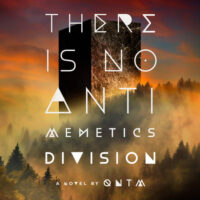
There Is No Antimemetics Division audiobook

Audiobook cover of There Is No Antimemetics Division, A Novel by qntm. It features a large dark cube/monolith emerging from a cloudy forest against an orange hued sky

I just finished up listening to the audiobook version of There Is No Antimemetics Division by qntm. Can safely say that I really enjoyed it and would highly recommend. That said, I loved This Is How You Lose The Time War, loaned it to a few people and don’t think any of them finished it.

I came across the book a few months ago via a Bluesky post by Erin Kissane, and put a hold on it at the library. The audiobook loan popped up first. Figured I’d likely end up returning it, since I hadn’t finished one in years, but found myself sucked in. The narration by Rebecca Calder is absolutely brilliant. Also thought that the redacted parts were handled well in this format.

I’ve read a decent amount of sci-fi, but not a ton of horror. My best mental comparison for this book in terms of weirdness, gore and mental exercises, is Embassytown1, by China Miéville. So, if you liked that one, I’d add qntm’s book to your reading (or listening) list for the year.

  1. Originally had The City & the City in here but misremembered. Seems appropriate. ↩︎

Trinity College Dublin begins project to relocate vulnerable books

Three hundred years after the first foundation stone was laid, the 250,000 ancient books and manuscripts – including the ornately decorated ninth-century Book of Kells – printed on vellum, paper or silk are to be moved one by one, along with 500,000 others, to make way for the restoration of the building.

It is a monumental task that will take the best part of five years and cost €90m (£75m).

“Moving 750,000 vulnerable books is quite an undertaking, so we are having to pilot everything to see what is involved,” says TCD’s librarian and archivist Helen Shenton, who is leading the daunting project involving a 50-strong team.


The Daughter as Detective. A bibliophile tries to understand her father through his favorite Swedish mystery books.

I don’t know why it’s so frustrating that my dad refuses to say or even think about why he likes the things he does, when his preoccupations run so deep and are so consistent.


Don’t wear gloves when you handle old books. From the British Library:

Whenever a manuscript is featured in the press or on television, we inevitably receive adverse comments about our failure to wear white gloves! The association of glove-wearing with handling old books is in fact a modern phenomenon, and one that has little scientific basis.

Essentially, we recommend that it is preferable to handle manuscripts with clean dry hands.

We were told the same thing when I studied book design at Reading. Gloves tend to cause more damage than they prevent. It’s one of those things that looks nice in photos.


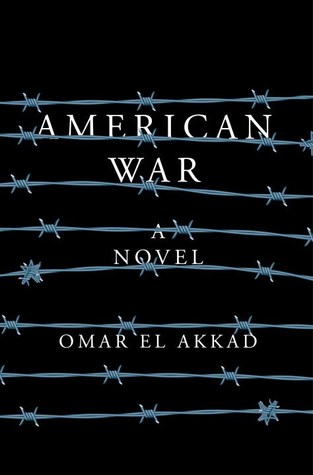
American War ?

American War is the first novel from Omar El Akkad. If you’re into dystopian sci-fi, I’d definitely recommend picking up a copy. His prose can be a bit of a slog at times, but worth seeing through. The world building is amazing, I found myself wanting to know more about it.

Full disclosure: Omar is an old friend, so I might be a tad biased. He has always been a prolific wordsmith, and one of my favourite writers, so I’m super-stoked that the book has been well received. Go Omar!


The book as a device

The Internet Archive is now archiving physical copies of books.

As the Internet Archive has digitized collections and placed them on our computer disks, we have found that the digital versions have more and more in common with physical versions. The computer hard disks, while holding digital data, are still physical objects. As such we archive them as they retire after their 3-5 year lifetime. Similarly, we also archive microfilm, which was a previous generation’s access format. So hard drives are just another physical format that stores information. This connection showed us that physical archiving is still an important function in a digital era.

Recognizing that a book is just another device is important. It’s way too easy to make all sorts of cute analogies and comparisons between books and the digital world, so I’ll avoid it. How our society consumes words and images is bound to shift, but the book will still be here in fifty years.