
How an unassuming font took over the world, a slideshow-essay from Slate.
Month: September 2010
Helvetica-Kinetic Typography by Jon DeBoer
How to build a Dalek
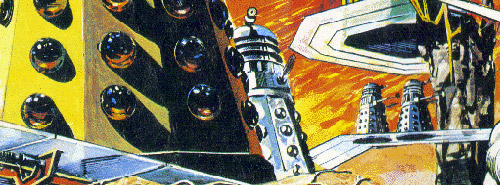
Blueprints for building your own Dalek. For those sci-fi geeks bent on true world domination, plunger style.
Jane Austen manuscripts

Jane Austen’s Fiction Manuscripts is a joint project from the University of Oxford, King’s College and the British Library, that seeks to create a digital resource from all of the author’s surviving manuscripts.
Jane Austen’s fiction manuscripts are the first significant body of holograph evidence surviving for any British novelist. They represent every stage of her writing career and a variety of physical states: working drafts, fair copies, and handwritten publications for private circulation.
Great care has been taken to provide a digital record of the original materials, as well as an accurate transcription which can be viewed simultaneously.
Austen’s handwriting and punctuation are agreed to be of great importance in the understanding of her work but have hitherto been little studied. The mark up scheme has recorded orthographic variants and punctuation symbols in minute detail for subsequent computational interrogation.
The flash interface is somewhat awkward to use, but the “diplomatic display” is quite impressive.
Serif Bueller’s Day Off, a comic from PVP.
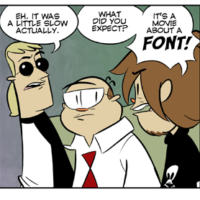
Serif Bueller’s Day Off, a comic from PVP.
Feedburner subscribers have dropped by…
Feedburner subscribers have dropped by 300+ in the last couple days, odd. http://twitpic.com/2q1ruf
Videogames as journalism
Can videogames be journalism? A brief look at Newsgames: Journalism at Play, the new book from Ian Bogost, Simon Ferrari and Bobby Schweizer.
“Games allow us to address systems instead of stories,” Dr. Bogost said in an interview. And, in some ways, they can offer more depth. People often search for simple answers to broad topics like the Gulf oil spill or the 2008 financial crisis, but in reality both were the result of a confluence of failures and events. Games can help to convey that complexity. “In particular, they can offer this experience of how something works rather than a description of key events and players,” Dr. Bogost says.
Japanese woodblock prints

UCSF has a collection of Japanese woodblock prints available for your viewing pleasure. The archive consists of four hundred woodblock prints on health-related themes.
The Japanese woodblock prints offer a visual account of Japanese medical knowledge in the late Edo and Meiji periods. The majority of the prints date to the mid-late nineteenth century, when Japan was opening to the West after almost two hundred and fifty years of self-imposed isolation.
Ligature, Loop & Stem print

The Lesson Plan Print from Ligature, Loop & Stem is a thing of beauty. Unfortunately, it’s sold out already. Head over to FontFont for a writeup about the piece and a brief interview with one of the creators, Grant Hutchinson.
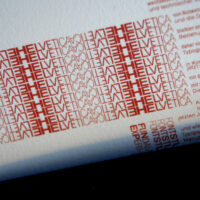
Helvetica Experiments by Neha Hattangdi. Thanks to @TommyVF for the
Helvetica in space
After reading Ben Terret’s post regarding how many helveticas it would take to reach the moon, Jason Kottke decided to examine what size Helvetica would need to be set at to fill the space between the Earth and the Moon.
But let’s say you wanted to stretch one “helvetica” over the same distance…at what point size would you need to set it? The answer is 282.6 billion points. At that size, the “h” would be 44,600 miles tall, roughly 5.6 times as tall as the Earth. Here’s what that would look like:

He also takes a look at the equivalent type size of the two celestial bodies.
Soft drink industry structure
A visualization of the American soft drinks industry. Despite the apparent abundance of choice, three firms control 89% of the market.